

The Future of Building: 7 Key Trends Shaping Singapore Construction in 2026
As we navigate the mid-decade mark, the landscape of urban development is undergoing a profound transformation. The push for sustainable construction Singapore initiatives has evolved from a voluntary ambition into a structural necessity for developers and architects alike. By 2026, the local industry is no longer just experimenting with eco-friendly concepts; it is fully embedding resilience, carbon neutrality, and digital precision into the very bedrock of the built environment. As global climate targets tighten, Singapore stands at the forefront of this movement, setting a benchmark for high-density, green urban living. This evolution is driven by government mandates, shifting consumer expectations, and the urgent need to mitigate the impacts of climate change within a compact city-state. From smart building systems to advanced material science, the industry is recalibrating its methods to ensure long-term viability and operational efficiency. In this article, we explore the seven critical trends that are defining the future of construction, highlighting how technological innovation and environmental stewardship are converging to reshape our skyline into a model of modern, sustainable living for years to come.
Table of Contents
1. The Rise of Prefabricated Prefinished Volumetric Construction
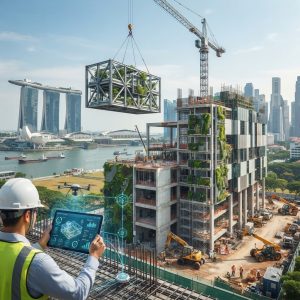
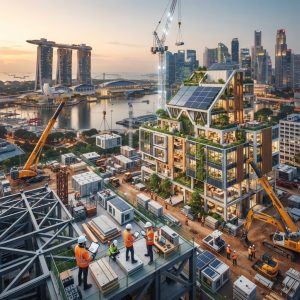
The construction landscape in Singapore is seeing a radical departure from traditional, labor-intensive onsite methods. Prefabricated Prefinished Volumetric Construction, or PPVC, has become the gold standard for high-rise developments across the island. By manufacturing complex modules offsite in controlled factory environments, project teams are able to significantly reduce waste, shorten project timelines, and enhance structural quality. This approach aligns perfectly with the broader goals of sustainable construction Singapore advocates, as it minimizes site disruptions and lowers the carbon footprint associated with onsite material transportation and heavy machinery usage. In 2026, we see this trend extending beyond simple residential units to include intricate mechanical and electrical systems, ensuring that buildings are assembled with surgical precision. Industry experts emphasize that modularity does not equate to architectural monotony; rather, it empowers design teams to push boundaries through standardized yet highly versatile components. The factory-controlled setting allows for tighter tolerances, better moisture control, and safer working conditions for laborers, addressing a key pain point in the traditional sector. As supply chains become more sophisticated, the integration of just-in-time delivery for these modules is reducing site clutter, which is critical in our dense urban setting. This transition is not merely about speed; it is about building a circular supply chain where waste is designed out of the process from day one. By prioritizing modular construction, Singapore is demonstrating that density and high-quality living can coexist if the methodology is rooted in precision, efficiency, and environmental foresight. As adoption rates soar, the economic benefits of shortened construction cycles are also providing a buffer against rising material costs, making this an essential strategy for developers looking to maintain competitive margins in an evolving market.
2. Digital Twins and Predictive Smart Building Systems
The convergence of the physical and digital realms is perhaps the most significant shift currently impacting the industry. Digital twins—dynamic, virtual replicas of physical buildings—have moved from pilot projects to becoming an industry standard for facility management and performance optimization. By 2026, any major development project in Singapore is expected to integrate a digital twin, allowing architects and engineers to simulate energy usage, occupant movement, and structural stress before a single shovel hits the ground. This technology is foundational to achieving sustainable construction Singapore objectives because it allows for real-time monitoring and predictive maintenance. When a building can communicate its energy consumption patterns or identify a cooling system failure before it occurs, the result is a drastic reduction in energy wastage and lifecycle maintenance costs. Smart building systems are now powered by advanced AI and machine learning, which ingest data from thousands of IoT sensors embedded within the building envelope. These systems autonomously adjust lighting, ventilation, and air conditioning based on occupancy levels and ambient environmental conditions. For instance, sensors can detect natural sunlight levels to modulate artificial lighting, significantly lowering the electrical draw of commercial offices. Furthermore, the ability to visualize a building in a virtual environment helps in planning for future climate resilience, such as assessing flood risks or heat island mitigation strategies. Industry professionals are now leveraging these insights to ensure that building operations are as lean as possible, effectively creating a feedback loop where data-driven decisions replace guesswork. This trend is central to the future of urban resilience, transforming passive concrete structures into intelligent, responsive entities that evolve with the needs of their users and the shifting environmental landscape, ensuring long-term operational excellence.
3. Embracing the Circular Economy in Material Sourcing
The paradigm of “take, make, and waste” is rapidly fading, replaced by a circular economy model that values material longevity and repurposing. Sustainable construction Singapore efforts are currently heavily focused on the life cycle of construction materials, specifically aiming to reduce the embodied carbon associated with raw concrete and steel production. In 2026, contractors are prioritizing materials with high recycled content, such as green cement and repurposed steel, and implementing rigorous deconstruction strategies rather than traditional demolition. This means that at the end of a building’s life cycle, its components are salvaged and reintegrated into new projects rather than ending up in a landfill. The industry is witnessing a surge in innovative materials like cross-laminated timber, which serves as a carbon sink while providing structural robustness. Furthermore, on-site recycling plants are becoming a common sight at larger construction projects, where concrete rubble is crushed and reused for non-structural applications like temporary road paving or backfilling. This approach not only conserves natural resources but also reduces the logistical burden of transporting waste off-site. The focus has shifted towards material passports, which track the origin, composition, and potential for reuse of every major component utilized in a project. This ensures transparency throughout the building’s lifecycle and enables future facility managers to understand exactly what materials they are working with. By fostering a market for recycled aggregates and secondary construction materials, the Singapore government and industry partners are building a self-sustaining ecosystem. This transition is crucial for lowering the nation’s total carbon footprint, as embodied carbon accounts for a massive portion of the environmental impact of any development. By viewing every structure as a potential reservoir of valuable future resources, we are fundamentally redefining what it means to build responsibly in a resource-constrained nation.
4. Net-Zero Energy and Green Certification Mandates
As the nation moves toward its 2030 and 2050 green goals, the pressure to deliver net-zero energy buildings has reached an all-time high in 2026. The regulatory framework surrounding sustainable construction Singapore has become increasingly stringent, with high green certification ratings being a prerequisite for most commercial and residential tenders. This shift forces developers to look beyond traditional insulation methods and invest in cutting-edge technologies like solar-integrated glass, phase-change materials, and advanced thermal mass management. Achieving net-zero requires a holistic strategy: minimizing demand through passive design and meeting remaining needs through renewable on-site generation. Passive design features, such as building orientation to maximize natural ventilation and deep-set windows to prevent solar heat gain, have become non-negotiable elements in architectural briefs. Moreover, the integration of building-integrated photovoltaics (BIPV) is transforming facades into power-generating assets, effectively blurring the lines between energy production and architectural aesthetics. To support this, industry experts are utilizing complex modeling software to optimize building envelopes, ensuring that energy performance is baked into the initial design concepts. A crucial aspect of this trend is the benchmarking of operational performance. Many new buildings are now required to display real-time energy performance dashboards, creating a culture of accountability among tenants and property owners. The table below illustrates the relative efficiency gains of various modern building technologies that are becoming standard in the local market today:
| Technology Category | Primary Sustainability Impact | Expected Efficiency Gain |
|---|---|---|
| Solar-Integrated Glass | Renewable Energy Generation | 15-20% Reduction in Grid Demand |
| Smart HVAC Systems | Energy Optimization | 25-30% Reduction in Cooling Load |
| High-Performance Glazing | Thermal Insulation | 10-12% Energy Saving |
| Modular Building Components | Waste & Resource Management | 30% Reduction in Construction Waste |
These gains are collectively enabling the construction sector to meet the rigorous standards of current green building frameworks. Furthermore, the integration of energy storage systems, including modular battery arrays, is becoming more common, allowing buildings to store excess solar energy and release it during peak demand periods. This balancing capability is vital for managing the energy load of high-density developments while reducing the strain on the national power grid. As energy becomes an increasingly precious commodity, the ability to build, manage, and optimize for zero-energy operations is defining the industry’s leaders, setting a new bar for developers who want to align with both regulatory expectations and the shifting demands of conscientious, eco-aware tenants who are increasingly choosing where to live and work based on sustainability credentials.
Conclusion
The construction industry in Singapore is currently undergoing a structural transformation that emphasizes resilience, efficiency, and ecological responsibility. By 2026, the trends discussed—modular construction, digital twins, circular material practices, and net-zero energy design—have transitioned from innovative options to baseline requirements for success. This evolution reflects the urgency of our times and the ingenuity of local professionals who are dedicated to creating a greener, smarter, and more habitable urban future. As the sector continues to push the boundaries of what is possible within a dense city-state, the lessons learned here are likely to inspire global construction practices for years to come. By prioritizing sustainable construction Singapore standards, our industry is not only building for the present but also safeguarding the well-being of future generations through responsible development.
Frequently Asked Questions
1. How does modular construction benefit the environment in Singapore?
Modular construction significantly reduces site noise, dust, and construction waste while minimizing carbon emissions associated with long-term onsite logistics.
2. What is the role of digital twins in modern building management?
Digital twins allow for real-time monitoring and predictive maintenance, enabling building systems to operate at peak efficiency and reduce total energy consumption.
3. Why is the circular economy important for local developers?
It promotes the reuse of materials and reduces reliance on raw resources, which lowers the embodied carbon of new developments and eases waste disposal pressures.
4. What are the key features of net-zero energy buildings?
These buildings combine passive design strategies to reduce demand with active renewable energy generation, such as solar power, to achieve a net-zero annual footprint.
5. Will these new sustainable technologies increase the overall cost of housing?
While initial costs may be higher, the long-term savings in operational energy, maintenance, and reduced waste make these technologies economically viable over the project’s entire lifecycle.