

Building the Future: Integrating Sustainability and Smart Tech in Singapore Construction
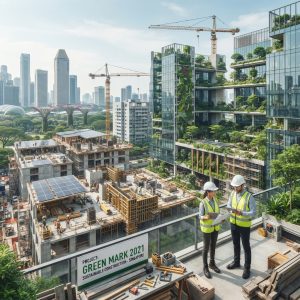
The construction sector in Singapore is currently undergoing a transformative phase, marked by an impressive 6.2% growth rate in 2026. This surge is primarily fueled by a paradigm shift towards sustainable construction Singapore practices, mandated by stringent new environmental legislation. As the city-state accelerates its transition toward a greener economy, the integration of advanced smart building technologies has become a necessity rather than a luxury for developers and design-build firms. By blending ecological responsibility with cutting-edge digital infrastructure, the nation is redefining urban living. Our industry experts are witnessing a fundamental change where project lifecycles are no longer viewed through the prism of short-term cost, but rather long-term carbon efficiency and energy optimization. This case study examines how forward-thinking firms are navigating these regulatory requirements while deploying smart home innovations to meet the demands of a tech-savvy population. By aligning architectural design with the national sustainability agenda, builders are crafting resilient urban landscapes that promise a lower environmental impact, improved building efficiency, and a superior quality of life for residents across the island. As we navigate this transition, we look at how innovation and policy converge to shape the future of Singapore’s built environment.
Table of Contents
The Role of Green Legislation in Development
The acceleration of sustainable construction Singapore projects is largely attributed to the robust legislative framework recently implemented by national regulatory bodies. These regulations mandate that all new developments achieve specific energy performance benchmarks, ensuring that buildings contribute to the overarching national goal of carbon neutrality. Industry experts observe that these mandates are not merely administrative hurdles but are instead catalysts for genuine design innovation. By standardizing green building codes, the government has created a level playing field where environmental performance metrics are central to project approval. When firms approach a new development, the first priority is now to conduct rigorous environmental site assessments that evaluate passive design potential, such as cross-ventilation, daylighting, and thermal mass optimization. This proactive approach to planning ensures that the building shell itself acts as the primary barrier against the tropical heat, significantly reducing reliance on active cooling systems later in the building lifecycle. Our team has noted that projects adhering to these new codes often see a faster approval process, incentivizing firms to exceed the basic requirements. Furthermore, these regulations emphasize the use of high-recycled-content materials and low-carbon concrete, which are becoming staples in the modern construction supply chain. As we look at the financial landscape, developers are realizing that compliance creates inherent value in the form of lower utility costs and higher market desirability. This shift away from traditional, resource-heavy methods marks a critical evolution in how we view construction within the limited land resource of Singapore. By embedding these principles into the initial conceptualization phase, architects and engineers are successfully harmonizing the demands of modern infrastructure development with the imperative of environmental stewardship, ensuring that urban growth is achieved in a way that respects the ecological limits of our shared urban space.
Integrating Smart Home Infrastructure
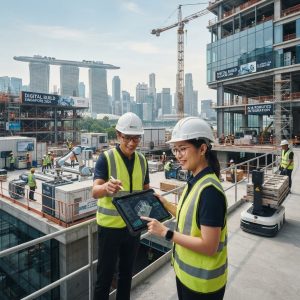
Modern construction has moved beyond structural integrity to prioritize the intelligence of the built environment. Smart home integration is now a cornerstone of new residential projects, enabling buildings to communicate with occupants and optimize their own resource usage. In the context of sustainable construction Singapore developments, smart technology serves as the interface between the user and the building’s energy management systems. Sensors are now standard across most new projects, measuring everything from occupancy levels to air quality and energy consumption in real-time. By utilizing Internet of Things (IoT) sensors, building managers can dynamically adjust lighting, climate control, and water heating systems, preventing the wastage that historically characterized residential living. Our team has collaborated with technology specialists to integrate automated building management systems that use machine learning to predict energy demand spikes based on historical usage patterns. This level of automation significantly reduces the carbon footprint of high-density housing developments. Residents benefit from intuitive interfaces that allow them to monitor their consumption habits, fostering a culture of mindfulness regarding energy use. These systems are not just about convenience; they are critical tools for achieving the energy-saving targets mandated by the latest legislative changes. When smart systems are installed at the point of construction, the integration is seamless, allowing for encrypted communication between hardware components and centralized management hubs. The result is a highly responsive living environment that adapts to the needs of its occupants while maintaining a minimal environmental footprint. By leveraging this technology, the construction industry is shifting from providing passive structures to delivering active, intelligent ecosystems that enhance the daily experience for residents while fulfilling long-term sustainability goals. The integration of high-speed connectivity with advanced automated control systems is arguably the most significant trend currently reshaping the design and build industry in Singapore today.
Measuring Long-Term Operational Efficiency
The true success of sustainable construction is measured not by the completion of a project, but by its operational performance over decades. This long-term focus has necessitated a radical shift in how design-build firms engage with the entire lifecycle of a structure. By implementing Building Information Modeling (BIM), our teams are able to simulate energy usage scenarios before a single foundation is poured. This digital twin technology allows for the precise calculation of lifecycle carbon costs, enabling engineers to select materials and systems that minimize waste throughout the lifetime of the building. The table below illustrates the typical impact of energy-efficient design choices on long-term operational costs within the current local market environment. It is clear that the initial investment in sustainable technology, while slightly higher, pays dividends through dramatically lower utility expenditure and reduced maintenance requirements. Furthermore, buildings designed with sustainability in mind tend to hold their value better as environmental standards continue to tighten in the future. We are tracking a steady decline in energy intensity per square meter across our portfolio, a testament to the effectiveness of these integrated design approaches. When we consider the necessity for retrofitting older buildings to meet modern standards, it becomes evident that building it right the first time is the most cost-effective path forward. This proactive maintenance culture is supported by smart diagnostics that alert facility managers to mechanical inefficiencies before they become catastrophic failures. By tracking real-time performance against projected models, our teams can perform continuous commissioning, ensuring that the building operates at its peak efficiency for years to come. This commitment to long-term performance is vital for maintaining the high-quality urban standard expected in Singapore, where density demands extreme efficiency to ensure comfort and sustainability for everyone.
| Efficiency Metric | Traditional Construction | Sustainable Smart Construction | Long-Term Savings % |
|---|---|---|---|
| Annual Energy Cost/SqM | $85.00 | $52.00 | 38.8% |
| Carbon Footprint (Annual) | High | Low | 55% Reduction |
| Maintenance Frequency | Frequent | Condition-Based | 30% Reduction |
| System Lifespan | 15 Years | 22 Years | 46% Increase |
Future-Proofing Urban Design Landscapes
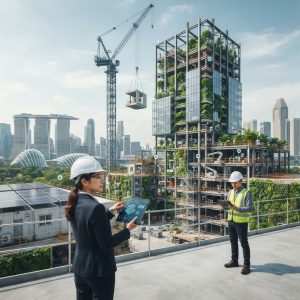
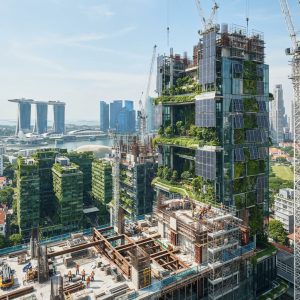
The horizon of sustainable construction Singapore development is being defined by a move toward circularity and regenerative design. Future-proofing means designing buildings that can adapt to changing societal needs while continuing to minimize ecological strain. Our team is exploring the integration of vertical greenery and modular interior systems that allow space to be reconfigured without massive demolition waste. This approach, known as design for disassembly, ensures that at the end of a building’s life, the components can be recycled or repurposed rather than sent to landfills. Furthermore, the incorporation of urban solar glass and building-integrated photovoltaics is becoming increasingly feasible as efficiency levels in solar technology improve. By turning facades into power-generating surfaces, developers are transforming structures from energy consumers into energy producers. This transition is essential for the city’s ambition to become a carbon-neutral metropolis by 2050. The challenge, however, lies in balancing these innovative materials with the strict safety standards required for high-rise developments in a dense tropical environment. Nonetheless, by working closely with researchers and testing facilities, we are uncovering new ways to apply these materials safely and effectively. We believe that the next wave of development will be characterized by interconnected building clusters that share energy and water resources through a decentralized micro-grid. This community-wide approach to resource management is the logical progression of current smart building trends. As urbanization continues, the demand for sustainable, efficient, and intelligent housing will only grow. By prioritizing adaptability and environmental performance today, the industry is creating a foundation that will serve the needs of generations to come. The future of the built environment is inherently linked to our ability to innovate within the regulatory landscape, leveraging technology to create spaces that are as resilient as they are beautiful and efficient.
In conclusion, the evolution of the construction sector in Singapore is a testament to the power of aligning regulatory ambition with technological innovation. By embracing sustainable construction Singapore practices and integrating smart home systems, firms are successfully navigating the challenges of a growing population and a warming climate. Our findings demonstrate that when sustainability is prioritized from the inception phase, the result is not only a reduced environmental footprint but also a more efficient, resilient, and valuable built environment. The path toward a greener future is clearly defined by the adoption of data-driven design, renewable energy integration, and a focus on long-term lifecycle performance. As we move forward, the industry must remain agile, continuing to refine its methodologies to meet the evolving demands of both society and the planet at large.
常见问题
1. Why is sustainable construction so critical for Singapore right now? Given its limited land, Singapore must prioritize resource efficiency to ensure urban resilience and meet ambitious national carbon neutrality targets by 2050.
2. How do smart home technologies contribute to sustainability? They allow for real-time monitoring and automation of energy-intensive systems like air conditioning and lighting, which significantly lowers overall consumption and waste.
3. Are sustainable building methods more expensive to implement? While initial costs can be higher, the long-term operational savings and improved asset longevity provide a strong return on investment for developers and building owners.
4. What is the role of the 2026 growth figures in this context? The 6.2% growth represents a surge in demand for high-quality, green-certified projects, confirming that sustainability has become a core competitive advantage in the local market.
5. How can developers ensure their buildings are future-proof? By adopting design-for-disassembly principles, using renewable energy generation, and building with flexible modular systems, developers can ensure their structures remain relevant for decades.