

Building the Future: How Singapore’s 80-80-80 Green Masterplan is Reshaping Construction
The urban landscape of Singapore is currently undergoing a radical transformation as the city-state accelerates its commitment to climate action. Central to this evolution is the ambitious Singapore green building masterplan, widely recognized as the 80-80-80 goal. This strategic initiative serves as a cornerstone for the nation’s journey toward net-zero emissions by 2050, mandating that 80 percent of buildings be green by 2030, 80 percent of new developments achieve low-energy performance, and an 80 percent improvement in energy efficiency for best-in-class buildings compared to 2005 levels. As construction firms, developers, and architects grapple with these stringent requirements, the industry is witnessing a profound shift toward circular economy principles and high-performance design. This article analyzes how this regulatory pressure is not just a burden but a catalyst for innovation in sustainable architecture. By integrating renewable energy, advanced materials, and smart building management systems, the local construction sector is setting a global benchmark for tropical urban density. Navigating these requirements demands a deep understanding of lifecycle assessments and carbon neutrality, ensuring that the next generation of skyscrapers is as environmentally responsible as it is visually striking for global residents.
Table of Contents
The Regulatory Impact on Modern Construction
The implementation of the Singapore green building masterplan has fundamentally altered the procurement and planning stages for every new development project within the island. Industry experts have observed that the 80-80-80 framework acts as a mandatory driver for early-stage collaboration between architects, structural engineers, and mechanical consultants. This regulatory pressure forces stakeholders to move beyond traditional building standards, pushing them toward aggressive energy modeling and passive cooling strategies that are critical for tropical climates. By mandating that a significant portion of the building stock achieves high-performance ratings, regulators have effectively created a baseline where energy efficiency is no longer an optional luxury but a core operational requirement. Contractors are now required to provide extensive documentation regarding the embodied carbon of materials used, which was previously a secondary consideration in the competitive bidding process. This transparency ensures that developers remain accountable for their environmental footprint throughout the entire construction lifecycle. Furthermore, the mandatory energy efficiency benchmarks necessitate the deployment of sophisticated building management systems that monitor consumption in real time. These digital tools provide valuable data that helps facility managers adjust cooling and lighting loads, ensuring that the structures meet the stringent 80 percent energy efficiency mandate. This systemic shift toward performance-based construction is forcing the local industry to invest heavily in training their workforce, ensuring that site supervisors and project managers are fluent in sustainable building technologies. As the regulatory framework continues to tighten, the industry is seeing a clear separation between legacy construction practices and modern, tech-forward methodologies. This transformation is not merely about complying with government mandates but about repositioning the construction sector as a leader in climate-resilient engineering, ensuring long-term viability in a carbon-constrained global market for investors and stakeholders alike.
Technological Integration and Smart Efficiency
Technological advancement is the engine that drives the objectives of the Singapore green building masterplan. To hit the 80-80-80 targets, construction projects must incorporate advanced smart sensors, Internet of Things (IoT) connectivity, and artificial intelligence-driven climate control. These digital technologies enable buildings to function as living organisms that adapt to occupancy levels and changing environmental conditions. By leveraging predictive analytics, facility managers can optimize energy usage, effectively reducing the cooling load of large commercial complexes, which is the largest consumer of power in the tropical climate. Industry leaders are increasingly adopting Building Information Modeling (BIM) to simulate energy performance before a single spade hits the ground. This virtual design process allows for the integration of renewable energy sources, such as photovoltaic systems, directly into the building facade, maximizing solar gain while minimizing thermal absorption. Moreover, the integration of green energy microgrids allows buildings to store energy during off-peak hours and distribute it efficiently during high-demand periods. This is a critical component of the national strategy to modernize the power grid and reduce reliance on traditional cooling methods. The reliance on data-driven design has ushered in a new era of transparency where every watt of energy is accounted for and optimized. As the construction industry moves forward, the focus is shifting toward smart facades that automatically adjust to solar intensity, further reducing the need for artificial cooling. The synergy between high-tech materials and intelligent software ensures that modern structures are not just static skeletons of concrete but dynamic systems that actively contribute to the nation’s overall carbon reduction goals. This technological leap, while initially costly, has proven to be essential in meeting the 80 percent target for new developments, setting a high standard that other global cities are now beginning to mimic through similar sustainability initiatives.
The Shift Toward Sustainable Materials and Design
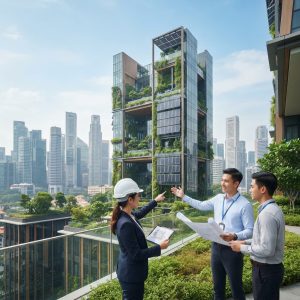
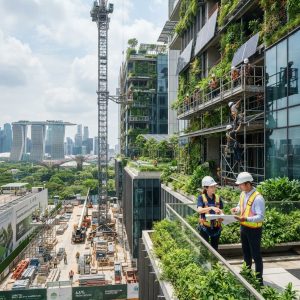
The physical composition of our cities is being redefined by a transition toward low-carbon materials, a key aspect of the Singapore green building masterplan. Traditional construction relies heavily on carbon-intensive concrete and steel, but the drive toward sustainability has prompted a surge in interest regarding mass engineered timber, recycled materials, and low-embodied-carbon cement. Industry experts are prioritizing the sourcing of materials that provide structural integrity while reducing the total carbon load of the project. This shift requires a meticulous evaluation of the supply chain, as developers are increasingly held to account for the carbon emissions generated during the extraction and transportation of construction materials. The adoption of pre-fabricated construction methods, such as Prefabricated Prefinished Volumetric Construction (PPVC), has also revolutionized the industry by reducing onsite waste and improving the efficiency of the assembly process. This method allows for higher precision, which directly correlates to better insulation and reduced energy leakage, supporting the mandate for energy efficiency. Furthermore, the design of urban spaces is evolving to prioritize greenery, incorporating vertical gardens and sky terraces that not only improve aesthetic appeal but also reduce the urban heat island effect. These design choices are not just decorative; they serve as natural cooling agents that significantly lower the cooling requirements for the entire building. The following table illustrates some of the material transitions currently occurring within the sector:
| Traditional Material | Sustainable Alternative | Environmental Benefit |
|---|---|---|
| Standard Concrete | Low-Carbon Cement/Recycled Mix | Reduced Carbon Footprint |
| Conventional Steel | Mass Engineered Timber | Carbon Sequestration |
| Standard Glass | Low-E Glazing/Smart Glass | Improved Thermal Efficiency |
| Energy-Intensive HVAC | Passive Cooling/IoT-Enabled Units | Significant Energy Savings |
By shifting to these alternative materials and design philosophies, the construction sector is effectively mitigating the life-cycle impact of its projects. This transformation reflects a deeper commitment to circularity, where waste is minimized, and materials are reused wherever possible. These strategies collectively ensure that the building industry contributes to, rather than hinders, the broader sustainability vision.
The Economic and Long-term Value Proposition
While the initial costs associated with the Singapore green building masterplan can be daunting, the long-term economic value proposition for developers is increasingly clear. Investors are recognizing that sustainable buildings command higher rental premiums, lower operational costs, and higher resale values. As the global market shifts toward ESG (Environmental, Social, and Governance) investing, properties that meet the stringent 80-80-80 criteria become more attractive to international capital. The ongoing operational savings achieved through energy efficiency translate directly into improved bottom lines for building owners. When utility costs are significantly lowered, the building becomes more resilient to fluctuations in energy prices, providing a stable return on investment. Furthermore, government incentives and green financing schemes have been introduced to assist firms in absorbing the upfront costs of green technology, making it easier for smaller construction companies to participate in this transformation. Industry experts suggest that the future of construction relies on a shift from viewing sustainability as an added cost to viewing it as a value-add. The buildings of tomorrow are being designed with deconstruction in mind, ensuring that materials can be recycled at the end of their lifecycle, which further enhances the circular economy model. This economic efficiency is augmented by the increased productivity of occupants in well-ventilated, naturally lit environments, which is a major selling point for modern commercial office spaces. The transition is not just about meeting a mandate; it is about building a future-proof city that maintains its global competitiveness. By prioritizing sustainable construction, the nation ensures that its infrastructure remains relevant in a world where climate change is a defining economic factor. This proactive stance protects the industry against future regulatory hikes that might penalize carbon-intensive properties, securing long-term profitability and environmental stewardship simultaneously.
Conclusion
In conclusion, the Singapore green building masterplan, specifically the 80-80-80 framework, represents a bold and necessary shift in the construction and design sector. By mandating aggressive energy efficiency targets and promoting the use of sustainable materials, the city-state is successfully reshaping its urban landscape into a model for climate-resilient development. The integration of high-tech building management systems and the adoption of low-carbon building practices are not merely regulatory compliance activities; they are essential strategies for long-term economic success and environmental sustainability. As the nation marches toward its 2050 net-zero goals, the construction industry continues to prove that rigorous standards drive innovation. The path forward is one of continuous improvement, where technology, policy, and design converge to create a healthier, more efficient built environment for everyone.
Frequently Asked Questions
What does the 80-80-80 green building goal mean?
It refers to three targets: 80% of buildings green by 2030, 80% of new developments achieving low-energy standards, and 80% improvement in energy efficiency for best-in-class buildings compared to 2005.
How does this plan affect construction costs?
While upfront costs for new technologies can be higher, long-term operational savings, increased property value, and available government green financing incentives help to offset these initial investments.
What role does technology play in these buildings?
Smart sensors, IoT devices, and AI-driven management systems are used to monitor and optimize energy consumption in real time, essential for meeting strict cooling and power usage benchmarks.
Why is sustainable material selection important?
Using low-embodied-carbon materials like mass engineered timber or recycled cement reduces the building’s overall carbon footprint from the moment construction begins, aiding the net-zero goal.
Can existing buildings participate in this masterplan?
Yes, the masterplan encourages the retrofitting of older buildings with modern energy-efficient technologies to ensure they meet updated sustainability performance standards over time.