

5 Key Trends Shaping Singapore’s Construction Industry in 2026
The construction sector in the Lion City is currently undergoing a massive transformation, positioning itself as a global leader in urban innovation and environmental stewardship. As we look ahead, Singapore construction trends 2026 suggest a landscape defined by rapid technological adoption, extreme sustainability mandates, and the development of highly complex specialized infrastructure. With the ongoing evolution of the Building and Construction Authority (BCA) guidelines, local stakeholders are pivoting toward methods that prioritize long-term resilience over immediate cost-cutting. This article explores the primary forces driving this shift, focusing on how firms can maintain a competitive edge in a market that demands both precision and ecological responsibility. From the integration of artificial intelligence in design workflows to the mandatory adoption of Green Mark 2021 standards, the industry is moving toward a future where efficiency and carbon neutrality are not just goals but operational necessities. By understanding these shifting dynamics, industry professionals and investors can better navigate the complexities of upcoming urban projects while contributing to the nation’s vision of a sustainable, technologically advanced built environment that serves the needs of its future generations effectively.
Table of Contents
The Rise of Digital Twins and AI-Driven Project Management
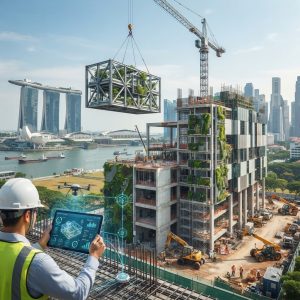
In 2026, the implementation of Digital Twin technology has transitioned from a theoretical advantage to a core operational requirement for all major development projects in Singapore. By creating high-fidelity virtual replicas of physical assets, project managers can now simulate environmental impacts, structural integrity, and long-term maintenance cycles with unprecedented accuracy. This shift is deeply integrated with AI-driven project management tools that analyze real-time data from construction sites to predict bottlenecks before they occur. The primary benefit of this digital transformation is the massive reduction in waste and scheduling errors that previously plagued large-scale infrastructure developments. Industry experts suggest that the integration of BIM (Building Information Modeling) with IoT (Internet of Things) sensors provides a continuous stream of operational data, allowing for predictive maintenance that extends the lifespan of the building significantly. Furthermore, AI algorithms are now assisting engineers in optimizing resource allocation, ensuring that labor and materials are utilized in the most efficient manner possible. As Singapore continues to optimize its limited land area, these sophisticated tools allow architects to maximize vertical space while maintaining strict adherence to safety standards and local building codes. Beyond the design phase, digital twins serve as a comprehensive handover document, providing future facility managers with a transparent history of the building’s construction. This digital-first approach ensures that the lifecycle management of new towers and commercial hubs is handled with precision, reducing costs for building owners and enhancing the overall user experience within these modern spaces. As project complexity increases, the ability to visualize and manage every cubic meter of a build through a digital interface has become the hallmark of successful, modern construction firms in this highly competitive, land-constrained market environment.
Mandatory Green Mark 2021 and Circular Construction
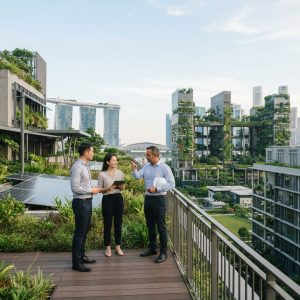
Sustainability is the cornerstone of the construction industry in Singapore, with the Green Mark 2021 standards serving as the primary benchmark for all new projects. By 2026, the industry has fully embraced the circular economy model, where materials are chosen based on their carbon footprint, recyclability, and potential for future reusability. The transition toward low-carbon concrete and recycled steel is no longer optional but is instead integrated into the procurement strategy of every major developer. These standards push the boundaries of what is possible, encouraging firms to explore biophilic design elements that enhance the well-being of occupants while actively cooling the building structure. Furthermore, the focus on building energy intensity has led to the installation of high-performance glazing and advanced smart building management systems that dynamically adjust power consumption based on occupancy patterns. The emphasis on lifecycle assessment means that building owners are increasingly focused on the embodied carbon of a project, not just the operational energy usage. This holistic approach ensures that every aspect of the project, from initial design to eventual decommissioning, minimizes its impact on the environment. Developers are also investing heavily in modular green technologies, such as vertical greenery systems that act as natural insulation, further contributing to the national target of achieving a net-zero built environment. This dedication to sustainability has positioned Singapore as a global hub for green construction expertise, attracting international investors who prioritize environmental, social, and governance criteria. By adhering strictly to these stringent regulations, local contractors are effectively future-proofing their assets against upcoming environmental legislations and ensuring long-term resilience in a changing global climate, ultimately contributing to a more sustainable urban landscape for all residents.
Surging Demand for Data Centers and High-Tech Facilities
The global demand for cloud services, artificial intelligence, and digital connectivity has sparked a construction boom specifically focused on high-tech infrastructure in Singapore. As the nation strengthens its status as a data gateway for Southeast Asia, the construction of specialized data centers has become a primary driver of the local industry. These facilities, however, are not your typical commercial builds; they require extreme precision regarding thermal management, power distribution, and structural reinforcement to support heavy server racks. Building these facilities requires a unique synergy between traditional construction teams and specialized mechanical, electrical, and plumbing (MEP) contractors. Furthermore, the rise of AI-driven manufacturing facilities requires similar technical expertise, with cleanrooms and specialized logistics hubs becoming more common in industrial zones. The technical requirements for these buildings necessitate that contractors possess advanced knowledge of cooling systems, particularly those that utilize liquid cooling or immersion technologies, which are far more efficient than traditional air-based cooling. The planning stage for these projects is incredibly complex, as engineers must account for the rapid pace of technological hardware updates that might render existing floor layouts obsolete within a few years. Consequently, designers are increasingly utilizing modular, adaptable architectural layouts that can be scaled or reconfigured with minimal disruption to the existing power and cooling infrastructure. This trend toward high-tech construction also extends to the logistics and supply chain sector, where automated, vertical warehousing facilities are replacing traditional single-story depots to make the best use of Singapore’s limited geography. The following table illustrates the key technical differences in building requirements for traditional office spaces versus modern high-tech data centers:
| Requirement | Traditional Office Space | High-Tech Data Center |
|---|---|---|
| Power Density | Standard (Low to Medium) | High (Ultra-High) |
| Cooling Focus | Comfort and HVAC | Precision Thermal Management |
| Structural Load | Standard Floor Load | Reinforced Heavy Duty |
| Adaptability | Static Layout | Modular/Flexible |
This specialized focus on high-tech facilities allows the industry to evolve, fostering a new generation of skilled workers who are as proficient in digital infrastructure as they are in concrete pouring and steel assembly.
The Acceleration of Prefabricated Prefinished Volumetric Construction
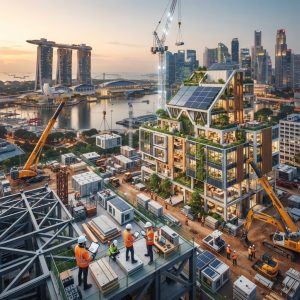
Prefabricated Prefinished Volumetric Construction (PPVC) has become the gold standard for residential and mixed-use projects in Singapore by 2026, significantly reducing onsite labor requirements and construction timelines. By manufacturing complete room modules in a factory setting under controlled conditions, contractors can ensure a higher level of finish quality and precision compared to traditional methods. This shift is critical as the industry faces ongoing labor constraints and the need for rapid delivery of public and private housing. Once the modules are completed in the factory, they are transported to the site and assembled like a complex 3D puzzle, which dramatically minimizes the amount of dust, noise, and traffic disruption in residential areas. Furthermore, the factory-controlled environment allows for the implementation of advanced testing and quality assurance protocols that are often difficult to execute onsite. PPVC also leads to significant material savings, as precise factory cutting reduces the volume of leftover construction materials. This efficiency is a core component of the drive toward higher productivity levels within the construction sector. As technology advances, we are seeing the integration of automated robotics in these manufacturing facilities, which can perform tasks like welding, painting, and window installation with a level of speed and accuracy that manual labor cannot match. This move toward offsite construction is not only improving safety standards—as most work is conducted in a stable, protected environment rather than at height—but it is also providing a more predictable project schedule, which is essential for developers who need to manage financing and market release timelines accurately. As more firms scale their PPVC capabilities, the cost of this technology is expected to drop, making it the default choice for a wider range of building types, including high-end commercial projects that require high-spec finishes.
Conclusion
As we navigate through 2026, the trajectory of Singapore’s construction sector is clear: the focus is moving toward technological integration, extreme efficiency, and sustainability. The convergence of Digital Twin technology, strict Green Mark 2021 compliance, and the growth of high-tech infrastructure is creating a highly sophisticated industry that is more resilient and adaptable than ever before. While challenges such as rising material costs and a specialized labor shortage persist, the move toward modular construction and AI-assisted workflows provides a robust framework for overcoming these obstacles. For firms operating in this space, staying competitive means embracing these shifts wholeheartedly. The future of the built environment in Singapore is not just about building taller, but building smarter, greener, and more efficiently to meet the demands of a modern, digital-native society.
常见问题
- What are the main benefits of using digital twins in construction? Digital twins allow for precise simulation, predictive maintenance, and real-time data tracking, significantly reducing waste and errors.
- How does Green Mark 2021 affect new projects? It sets rigorous standards for energy efficiency, water usage, and sustainable materials, pushing all developers to prioritize long-term environmental performance.
- Why is PPVC becoming so popular in Singapore? PPVC addresses labor shortages and tight timelines by shifting construction work to factory settings, ensuring better quality and less disruption.
- What makes data center construction different? Data centers require specialized power, heavy structural reinforcement, and precise thermal management systems compared to standard office buildings.
- Are these trends changing the job market? Yes, there is a growing demand for roles that bridge the gap between traditional engineering and high-tech digital systems.